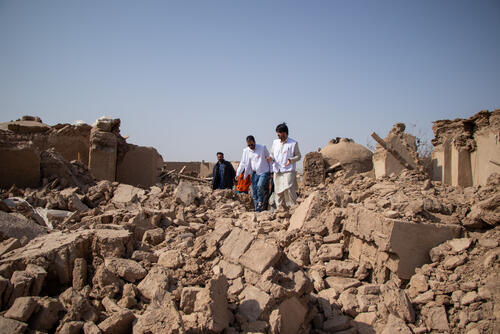
MSF staff walk over the rubble of what used to be people’s homes in Sanjaib Village, Injil District, Herat Province. The team is conducting an assessment of the population’s needs following the earthquakes in the province. All houses in the village were destroyed.

Crisis settings

MSF staff walk over the rubble of what used to be people’s homes in Sanjaib Village, Injil District, Herat Province, following earthquakes in the province. Afghanistan, October 2023.

© Paul Odongo/MSF
Ebola disease in DRC: find out how we're responding
Learn more

Learn about the different contexts and situations in which MSF teams respond to provide care, including war and natural disaster settings, and how and why we adapt our activities to each.
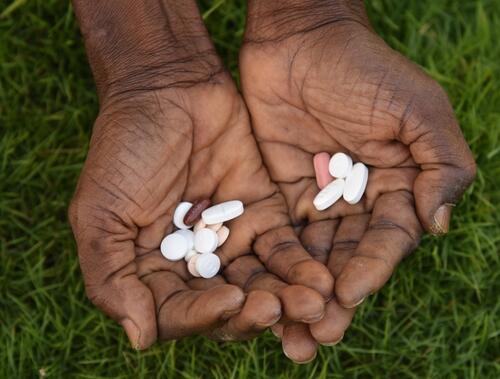
An MSF staff holding separate sets of the tuberculosis treatment medicine inside the Makeni Regional Hospital in Bombali District, Sierra Leone. The left hand contains pills from the BPaLM 6-month shorter regimen treatment and the right hand contains pills from the 18 months longer regimen treatment.  

MSF started rolling out the new BPaLM treatment in Bombali District, Sierra Leone, in November 2022, making this shorter treatment routinely available for patients diagnosed with drug-resistant tuberculosis (DR-TB).
Crisis settings

Access to medicines

Unaffordable, unavailable, not adapted - people around the world face these challenges in accessing lifesaving medicines.
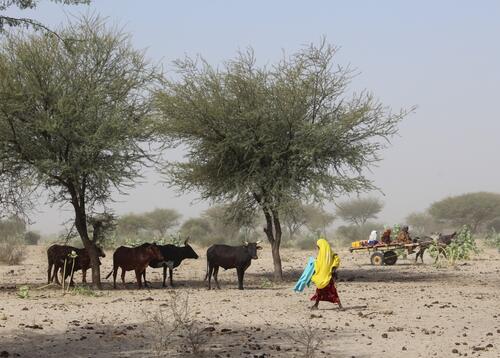
Much of the local economy depends on the rearing of livestock such as cows, goats and camels. Because of a lack of rain and a very bad harvest this year, it has become difficult for famers to feed their animals. Some have taken their cattle south to find pastures, or to sell their animals.
Crisis settings

Climate emergency

The health impacts of a changing climate are already a burden for many people in the world, including those MSF teams assist.
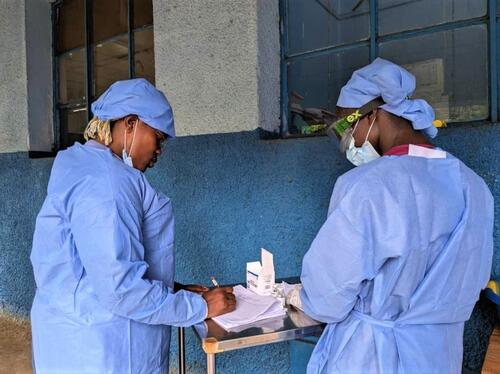
Two health workers talk at the Budjala general hospital, supported by MSF. MSF also deployed a team in the Budjala health zone in South Ubangi to support health authorities in the response against Mpox. Particular emphasis is also placed on mental health. In the community, health promoters intervene to ensure disease control and prevention. Thanks to their mobilization, more than 822 contact cases are being monitored for better epidemiological monitoring.
Crisis settings

Epidemics and pandemics

Millions of people still die each year from infectious diseases that are preventable or can be treated.
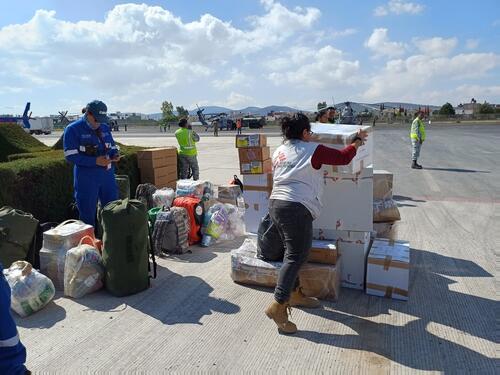
MSF staff prepare medical and humanitarian supplies for air transport to isolated communities.
Crisis settings

Humanitarian aid cuts

Massive cuts to humanitarian and global health assistance are increasingly affecting communities caught in crisis.
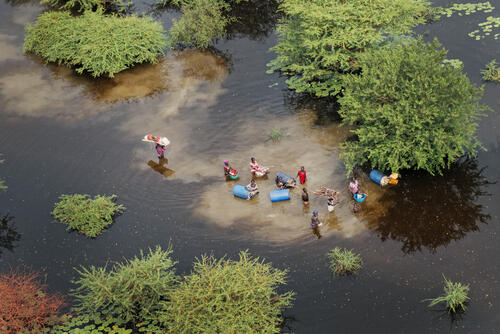
Families heading to dry land in Bentiu. 835,000 people have been directly affected by the flooding.

Across Unity state people’s homes and livelihoods (crops and cattle), as well as health facilities, schools, and markets, are completely submerged by floodwaters.
Crisis settings

Natural hazards

Within a matter of minutes, natural hazards can affect the lives of tens of thousands of people. Hundreds or even thousands of people can be injured, homes and livelihoods destroyed. Access to clean water, healthcare services and transport can also be disrupted. The impact of each event varies greatly and our response must adapt to each situation.
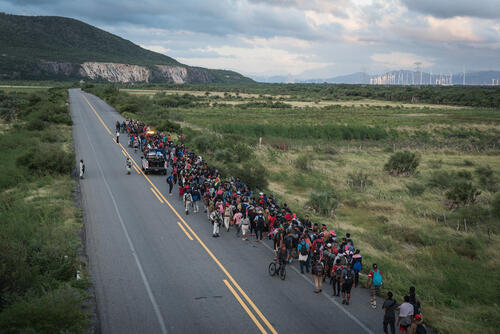
A caravan of migrants escorted by police officers advances along the route between the towns of La Venta and Juchitán, in southern Mexico.
Crisis settings

Refugees, IDPs and people on the move

There are many reasons for flight, including war, persecution, conflict, natural disaster, destitution and repression. With health and well-being jeopardised, the lives of the most vulnerable can be at risk.
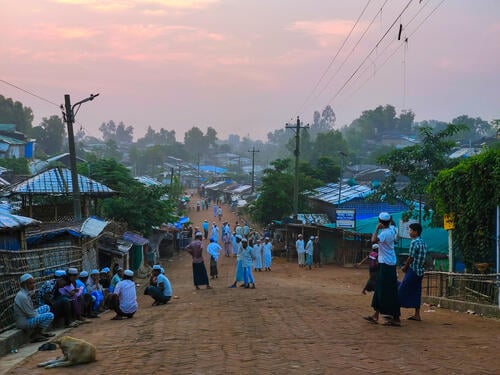
Rohingya refugees meet up and talk in the streets of the camps. Cox’s Bazar, Bangladesh, October 2023 © Ro Yassin Abdumonab

Des réfugiés rohingyas se rassemblent et discutent dans les camps de Cox’s Bazar. Cox’s Bazar, Bangladesh, octobre 2023 © Ro Yassin Abdumonab
Crisis settings

Social violence and exclusion

Many people are unable to access healthcare simply because of who they are. They may be afraid to seek help, or are excluded because they are forced to live outside of mainstream societal bounds.
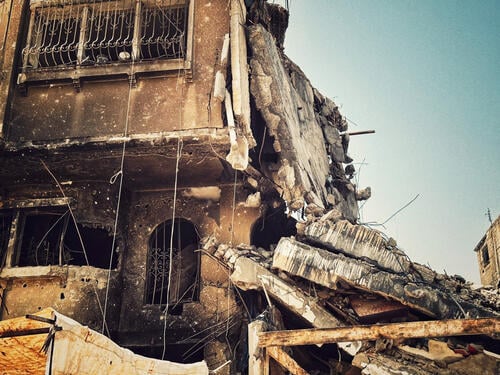
Destroyed buildings in Khan Younis, southern Gaza, taken on 26 May 2024
Crisis settings

War and conflict

More than one third of our humanitarian and medical assistance is for people affected by armed conflict.

Four mothers posing in a corridor of the Hospital in Bili. All four of them are staying in the hospital with their child, that's suffering from a severe case of malaria. Since the beginning of the project in 2016, the pediatric ward already treated more than 4.000 cases of complicated/severe form of malaria.
Médecins Sans Frontières (MSF)

Independent medical humanitarian assistance

We provide medical assistance to people affected by conflict, epidemics, disasters, or exclusion from healthcare. Our teams are made up of tens of thousands of health professionals, logistic and administrative staff - most of them hired locally. Our actions are guided by medical ethics and the principles of independence and impartiality. We are a non-profit, self-governed, member-based organisation.

Learn more