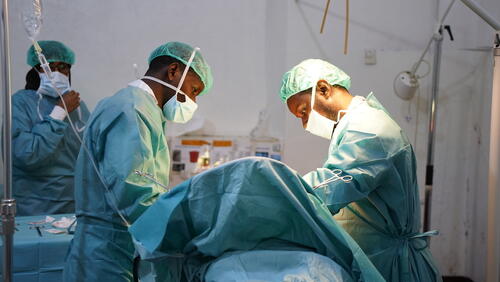
Dr. Ali Mohamed and Dr. Abdifatah Mohamed performing caesarean section at Bay Regional Hospital, an MSF supported hospital in Baidoa, Somalia on 9th October 2023.

Medical activities

Dr Ali Mohamed and Dr Abdifatah Mohamed perform a caesarean section at Bay Regional hospital in Baidoa. Somalia, October 2023.

© Mohamed Ali/MSF
Ebola disease in DRC: find out how we're responding
Learn more

Learn about how, why, and where MSF teams respond to different diseases around the world, and the challenges we face in providing treatment.
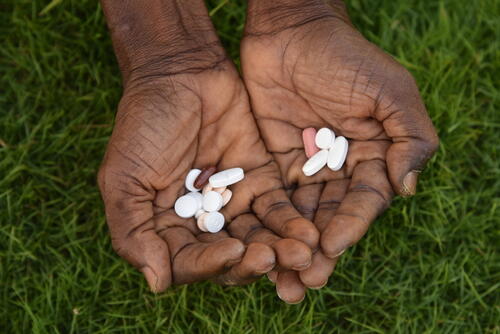
Image of medicine for the treatment of drug resistant tuberculosis (DR-TB). The left hand contains pills from the recently approved BPaLM 6-month shorter regimen treatment and the right hand contains pills from the longer 18 months regimen treatment. Following the validation of shorter regimen by WHO, MSF started supporting the Ministry of Health in implementing shorter regimen for patients affected by DR-TB since 2022 in Sierra Leone. Depending on individual patients’ diagnostic and clinical situation treatment regimens are initiated. Shorter regimens are often preferred by patients and medical professionals as longer treatment can be physically and mentally harder to adhere to.
Medical activities

Antibiotic resistance

Antibiotic resistance is a serious and growing phenomenon in contemporary medicine and has emerged as one of the pre-eminent public health concerns of the 21st century.
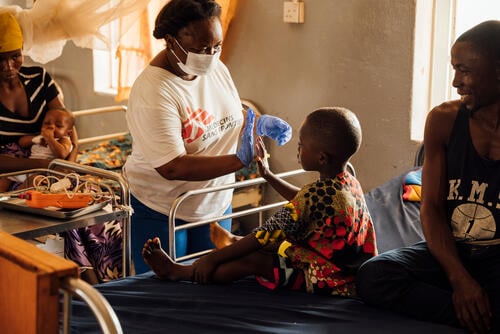
MSF Nursing Team Supervisor Regina Sandy gives a high-five to a recovering patient. The boy was treated in the paediatric wards in the MSF-supported Magburaka District Hospital. 

Regina supervises the nurses in the paediatric wards in the hospital: ICU, Inpatient Therapeutic Feeding, ER and neonatal ward. Regina first joined MSF in Bo during the Ebola epidemic that hit Sierra Leone between 2014 and 2016.
Medical activities

Child health

Around the world, Médecins Sans Frontières (MSF) teams are working to protect the health of children.
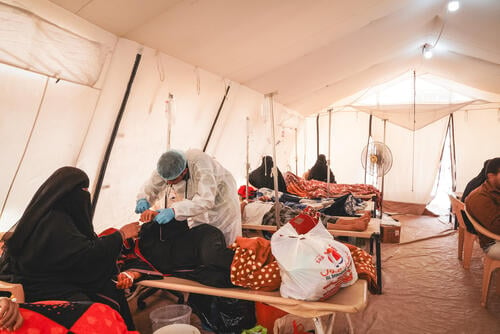
Medical team inside one of the cholera treatment centre’s tent providing medical care for cholera and acute watery patients. Aden city, Yemen.
Medical activities

Cholera

Although easy to prevent and treat, cholera affects up to 4 million people worldwide per year.
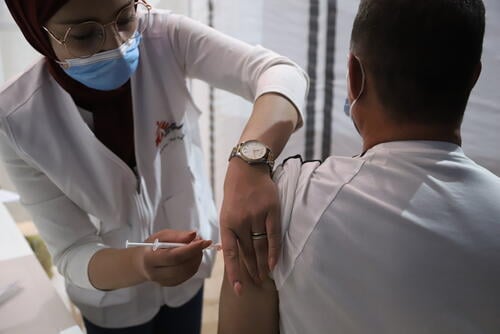
A man receives a dose of COVID-19 vaccine at the MSF vaccination center in Bar Elias (Bekaa Valley).
Medical activities

Coronavirus

Coronaviruses are a large family of viruses, most of which are harmless for humans. However, two types can cause severe lung infections. MSF is currently responding to a worldwide coronavirus pandemic, COVID-19
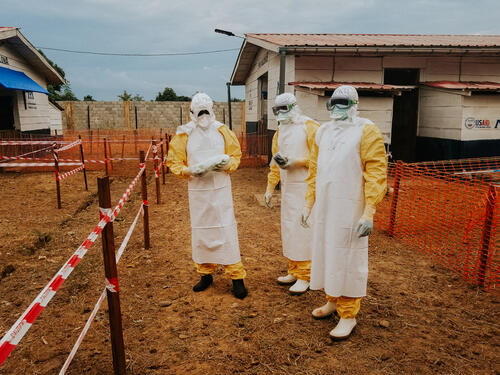
Dr Papy Dieya, MSF doctor, and two staff of the Congolese Ministry of Health at the Wangata Ebola Treatment Centre, Mbandaka, DRC.
Medical activities

Ebola and haemorrhagic fevers

Ebola and haemorrhagic fevers are rare but deadly. Outbreaks can kill up to 90 per cent of those infected, spreading fear and panic among affected communities.
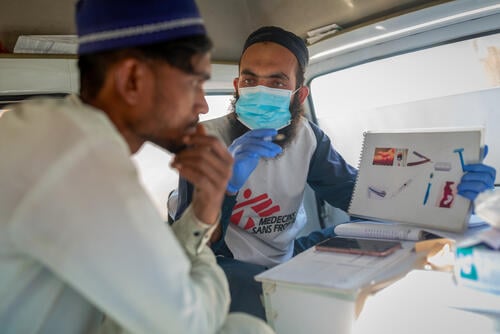
M. Zubair Khan, an MSF nurse, offers support and guidance to a hepatitis C patient during an outreach activity in a neighborhood of Machar Colony in Karachi, Pakistan.
Medical activities

Hepatitis C

Worldwide, an estimated 58 million people are infected with the hepatitis C virus, with about 1.5 million new infections occurring per year. While hepatitis C can be cured, few people have access to treatment.
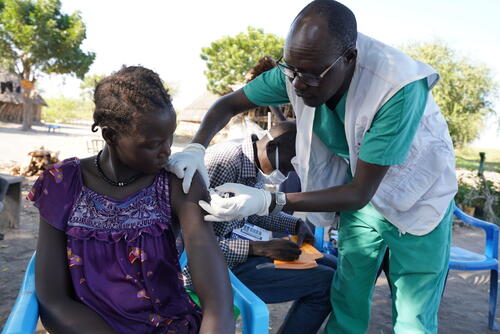
MSF nursing team supervisor Bang Bol administers the first dose of the hepatitis E vaccine to a woman in Wangmok village, Jonglei State.
Medical activities

Hepatitis E

Hepatitis E is transmitted by ingesting water contaminated by an infected person’s faeces. Outbreaks are often documented in places with poor sanitation, like camps for refugees and internally displaced people (IDPs). Hepatitis E commonly causes only a mild short-term illness.
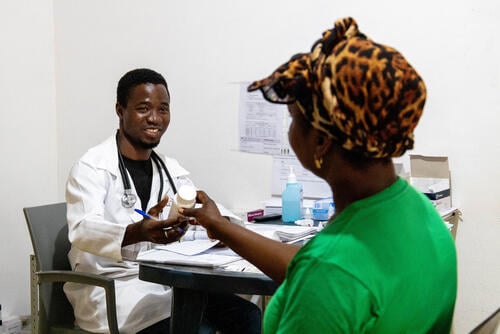
Maria Atonio, 43-years-old farmer from Macomia, talks to MSF’s Clinical Officer Mussa Rahamane Waide at MSF’s Clinic in Nanga, to receive ART and monitor her health. 

Maria was displaced in 2020 when Macomia village was attacked and returned home in 2022. Since she returned to Macomia, Maria has been collecting Anti-retroviral treatment at MSF’s clinic in Nanga.  

“Since June 2022, I have been coming to this clinic to collect my medication. I come once a month usually, and the services are quite good – the staff are very friendly and make us feel welcome and comfortable. I take my medication very seriously – one pill every morning.” Says Maria.
Medical activities

HIV/AIDS

Around 630,000 people died from HIV-related causes, while 1.3 million people became newly infected with the HIV virus in 2022.
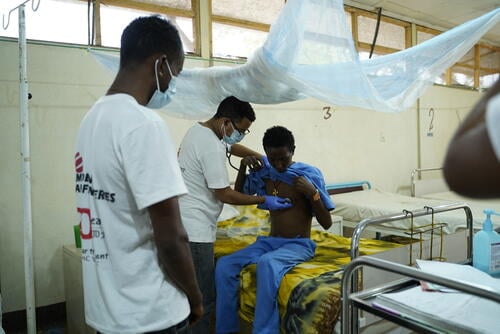
MSF medical staff are examining Mekuanent, a kala azar patient during the morning rounds at MSF’s Abdurafi health center specializing in treatment of Kala-azar and snakebite.
Among the young male population the prevalence of HIV infection is relatively high. That creates a unique situation with between 20 and 40% of kala azar patients HIV co-infected. This combination of two diseases, both severely immune suppressive, is almost impossible to cure.
Medical activities

Kala azar

Hundreds of millions of people are at risk of infection with kala azar - one of the world's most dangerous parasitic diseases. Only malaria is more deadly.
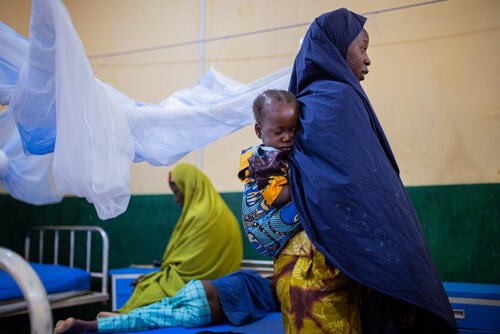
Rahana Ibrahim is 30 years old, “my daughter is 2 years-old, she started having fever and convulsions, I didn’t know it was malaria”. She explained she now received information about using mosquito nets during rainy season to avoid getting malaria again. Last year, Rahana had to bring her other child suffering from malnutrition to the town of Anka where MSF used to have an inpatient feeding centre before drastically reducing the operations during summer 2023 because of the high levels of violence.
Medical activities

Malaria

Each year, malaria kills over 600,000 people. Three-quarters of all deaths are children under five years of age.
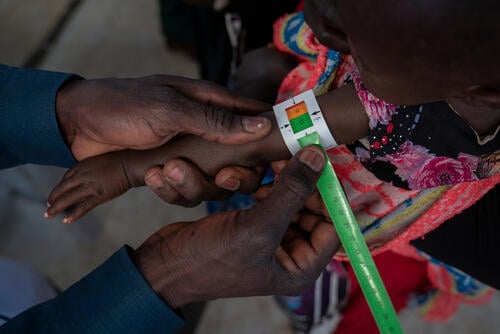
A nurse measure the mid-upper arm curcumferance of a child suspected vor malnutrition in the pediatric triage tent at the MSF hospital in Aboutengue refugee camp, Ouaddaï region, Chad. Feb 5, 2024. ©Diana Zeyneb Alhindawi for Médecins Sans Frontières
Medical activities

Malnutrition

More than 224 million children around the world last year suffered from malnutrition. It is the underlying contributing factor in nearly half of the deaths of children under five years of age.
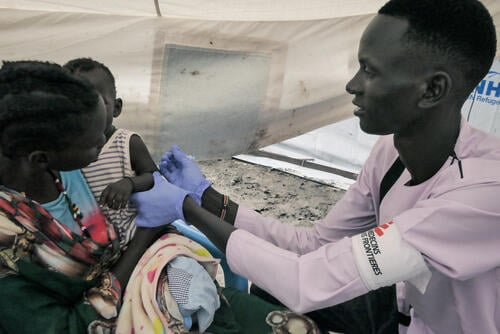
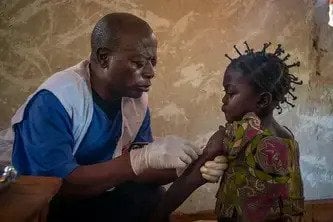
MSF Nurse Gatwech Tuoch immunizes a child against measles at the MSF Mobile Clinic in Bulukat, Upper Nile State South Sudan.
Medical activities

Measles

In 2023, our teams vaccinated 3.3 million people against measles in response to outbreaks. But the highly contagious viral disease remains one of the leading killers of young children.

Four mothers posing in a corridor of the Hospital in Bili. All four of them are staying in the hospital with their child, that's suffering from a severe case of malaria. Since the beginning of the project in 2016, the pediatric ward already treated more than 4.000 cases of complicated/severe form of malaria.
Médecins Sans Frontières (MSF)

Independent medical humanitarian assistance

We provide medical assistance to people affected by conflict, epidemics, disasters, or exclusion from healthcare. Our teams are made up of tens of thousands of health professionals, logistic and administrative staff - most of them hired locally. Our actions are guided by medical ethics and the principles of independence and impartiality. We are a non-profit, self-governed, member-based organisation.

Learn more